


 Listen to the podcast on Inkandescent Radio
Nov. 27, 2025 — “Thanksgiving: Thanking a Few Judges,” by IP attorney Timothy Trainer
November 2025: This month of Tim's Travails show — If you are tracking the news, you’ll be fascinated by this interview with IP attorney and author Timothy Trainer’s podcast/video show and fellow author Joe Relk. Today’s Topic: How fiction imitates reality — now, more than ever!
Read
Listen to the podcast on Inkandescent Radio
Nov. 27, 2025 — “Thanksgiving: Thanking a Few Judges,” by IP attorney Timothy Trainer
November 2025: This month of Tim's Travails show — If you are tracking the news, you’ll be fascinated by this interview with IP attorney and author Timothy Trainer’s podcast/video show and fellow author Joe Relk. Today’s Topic: How fiction imitates reality — now, more than ever!
Read
Nov. 27, 2025 — “Thanksgiving: Thanking a Few Judges,” by IP attorney Timothy Trainer

This week’s blog post from Timothy Trainer — On any given day, hundreds of decisions are issued by judges at state and federal court levels. Americans have gotten used to reading articles about “activist” judges. Usually, this tag is applied to a judge whose decision is disliked by those who disagree with that decision.
Here’s something to keep in mind about judges, generally:
- First, judges do not file a complaint that initiates a lawsuit. Cases that reach any judge are filed by prosecutors, people, and entities.
- In addition, those who initiate cases are the ones who identify the laws or regulations they believe are being violated, thereby informing the court (the judge) what the case is about.
- Third, federal judges do not pick and choose which cases they will oversee. In federal courts, there is a system of randomly assigning cases, although there are always exceptions.
- Lastly, the job of judges is to apply the facts and evidence presented and determine whether the laws and regulations at the heart of the legal controversy have been violated.
This year has been one that has placed judges in the crosshairs more than ever, given the many cases involving fundamental constitutional issues about not just the rights of citizens, but basic rights of people.
While some of the cases have been appealed and reversed, or decisions stayed until higher courts have an opportunity to review lower court decisions, judges in some cases have reminded us of the important role they occupy in our system and in our country.
As a lawyer and a citizen, I applaud the judges (and their clerks) who are taking the time to write thoughtful and thorough decisions that remind us about our rights despite the attempts of government officials, including law enforcement officers, to violate our laws and our rights as provided for in the Constitution.
Despite threats to both their personal safety and their jobs, many continue to do what they took an oath to do: respect the laws and the Constitution of the United States.
It is impossible to list and comment on all the cases in which judges have provided detailed legal analysis of fundamental rights and what the government can and can’t do.
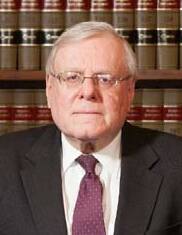
Judge William G. Young
About Judge William G. Young’s opinion:
While lengthy at 160 pages, Judge Young’s opinion (25-cv-10685-WGY, September 2025) regarding free speech is worthy of reading. He writes that one’s right to free speech is not limited to only U.S. citizens. While the U.S. government threatened deportation because of non-citizens exercising free speech, this judge ruled that the right of free speech does not depend upon one’s citizenship status.
After a lengthy analysis of facts and evidence presented, Judge Young writes on page 123 that “[o]n its face, the First Amendment does not distinguish between citizens and noncitizens; rather, it states simply, ‘Congress shall make no law . . . abridging the freedom of speech.’”
Judge Young writes his decision very much aware of the current political climate and is not deterred. He explains a problem President Trump has with the First Amendment, writing “his fixation with ‘retribution’. ‘I am your retribution’ he thundered famously while on the campaign trail. Yet government retribution for speech (precisely what’s happened here) is directly forbidden by the First Amendment.
The President’s palpable misunderstanding that the government simply cannot seek retribution for speech he disdains poses a great threat to Americans’ freedom of speech.” Unsurprisingly, the Trump Administration indicated it would appeal the decision.
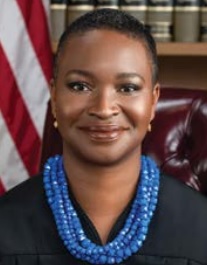
Judge Maame Ewusi-Mensah Frimpong
About Judge Maame Ewusi-Mensah Frimpong’s ruling:
Another federal district court judge who issued a significant ruling is Judge Frimpong (25-cv-05605-MEMF-SP, July 7, 2025). Judge Frimpong referenced testimony from individuals regarding the situations involved in the arrests and detentions, noting:
“Agents approached and prevented a non-white individual from walking away, but not those who appeared to be Caucasians. In another case, the agents arrived in unmarked vehicles, pointed a gun, and demanded to see identification without providing a reason for the stop. Yet in a different context, the agents provided no reason for stopping individuals at a church. Since they began on June 6, 2025, federal immigration raids have led to the arrest of over 1,500 people. Agents and officers approached suddenly, in military or SWAT-style clothing, heavily armed, masked, and wearing large vests with generic “POLICE” patches.
In addition to describing some of the tactics, Judge Frimprong writes that “attorneys and legal representatives from CHIRLA and ImmDef attempted to gain access to B-18 to advise detainees of their rights and assess their eligibility for relief, but they were not permitted to enter.”
Judge Frimprong provides the public with a civics lesson by citing previous court proceedings for all of us to read. She cites language from a case in 2000 where the appellate judges wrote that “Hispanic appearance is, in general, of such little probative value that it may not be considered as a relevant factor where particularized or individualized suspicion is required. Moreover, we conclude, for the reasons we have indicated, that it is also not an appropriate factor.”
The judge references another earlier case in 2006 by reminding all of us that “[a]n individual’s inability to speak English may support an officer’s reasonable suspicion that the individual is in this country illegally, [but] [by] itself, however, an individual’s inability to understand English will not justify an investigatory stop because the same characteristic applies to a sizable portion of individuals lawfully present in this country.”
Although Judge Frimpong’s decisions are on appeal, she provides a detailed lesson on the rights of individuals who are targeted by law enforcement. She makes clear that those detained have the right to legal counsel and to a phone call. She also writes that, in the absence of a reasonable suspicion of a violation of immigration laws, these detentions are not in accordance with the law. More importantly, she clarifies what reasonable suspicion requires by writing that:
- Defendants [the government] may not rely solely on the factors below, alone or in combination, to form reasonable suspicion for a detentive stop, except as permitted by law:
- Apparent race or ethnicity;
- Speaking Spanish or speaking English with an accent;
- Presence at a particular location (e.g. bus stop, car wash, tow yard, day laborer pick up site, agricultural site, etc.); or
- The type of work one does.
Judge Frimprong’s 52-page ruling is important, even if she’s overturned on appeal as it provides significant bases for consideration about a person’s freedom of movement without fear of being stopped by law enforcement officers.
Lastly, while many will disagree, federal judges at the district court and appeals court levels have prevented public schools from displaying the Ten Commandments in public school classrooms in Texas and Louisiana. However, the cases arising from these two states will be heard by a full panel of appellate court judges in January.
What has become clear in recent months is that, at the state and federal levels, those who have sworn an oath to uphold the Constitution have been actively undermining what they claim to believe. The conduct of many elected officials contradicts what they say and what they’ve sworn to uphold.
We can only hope that there continue to be judges at all levels who still believe in the constitution and laws to protect anyone and everyone from the government’s intrusion into our private lives and will continue to order the government to desist from arbitrary and baseless enforcement actions that threaten our freedoms.
Through their written decisions, these judges are reminding us of the standards to which we must hold the government to account and for that, I thank them.

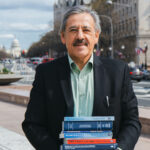
Timothy Trainer in Washington, DC. Photo by AnnaGibbs.com
About the Timothy Trainer: Writing books is a passion for attorney Timothy Trainer, who for more than three decades focused on intellectual property issues in his day job. He has worked in government agencies and in the private sector and his assignments have taken him to 60 countries around the world.
Tim found time to pen a few non-fiction tomes, including his first book, Customs Enforcement of Intellectual Property Rights; the 15th edition was published in 2022. Thomson Reuters’ Aspatore Books published Tim’s next title in 2015, Potato Chips to Computer Chips: The War on Fake Stuff.
Fiction was a genre he always wanted to try. In 2019, Pendulum Over the Pacific, was released by Joshua Tree Publishing. “This political intrigue story is set in Tokyo and Washington, D.C., and centers on trade tensions between the U.S. and Japan in the late 1980s,” Tim explains.
In 2023, his first series hit bookstores: The China Connection.
In 2025, he published the sequel, The China Factor, which ranked #63 on the Amazon Asian Literature list in May.


